Cromblog
Omarchy: Giving Linux Another Try
October 13, 2026 · 4 min read
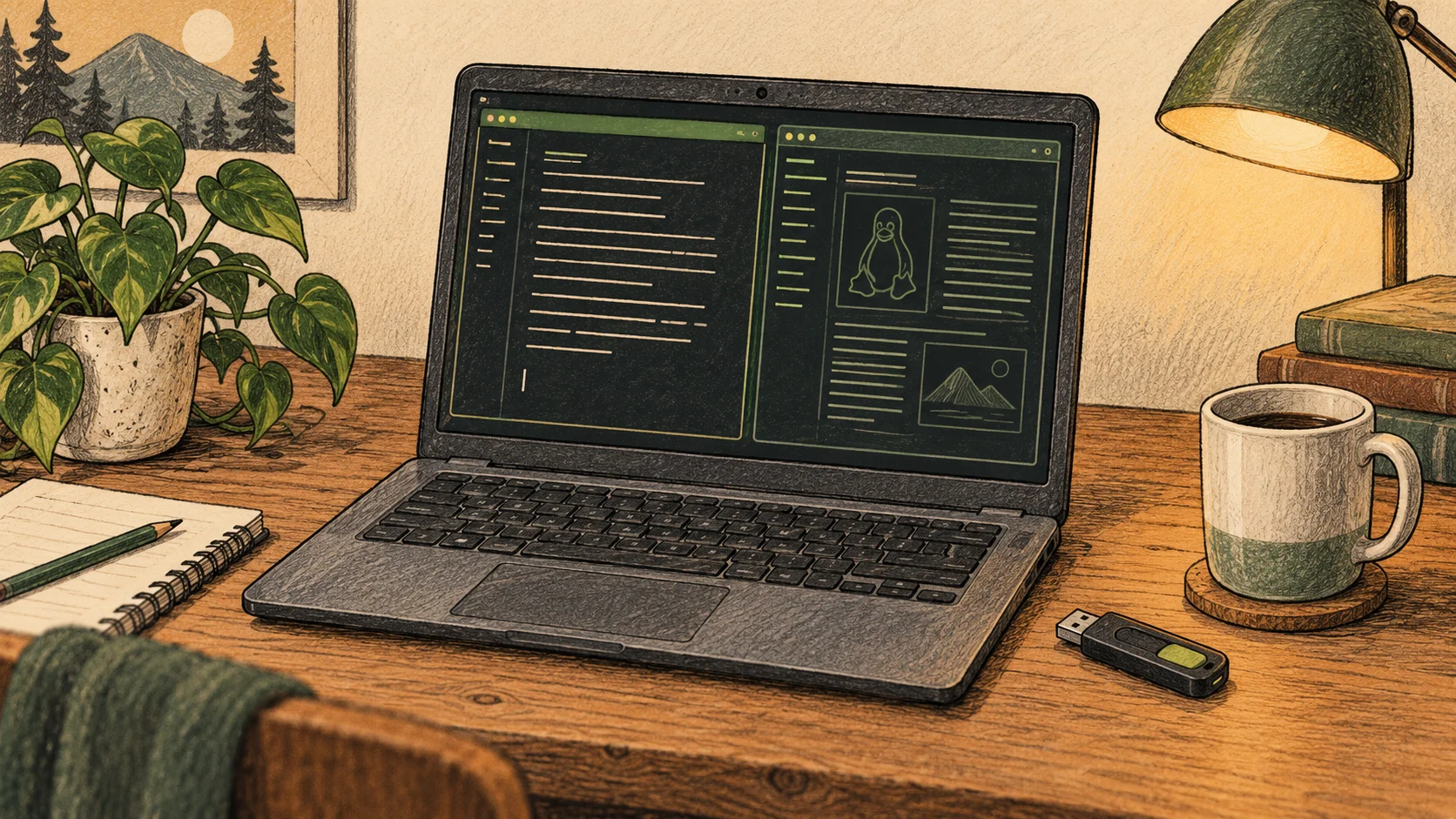
For years I have been interested in Linux — a free and open-source family of operating systems built around the Linux kernel — but have always been discouraged by the learning curve. About a decade ago, I tried installing Ubuntu alongside Windows on my old laptop. The experiment turned into a mess, and within a week I was back to using Windows exclusively. Since then, Linux has remained an intriguing but seemingly impractical idea.
Then I listened to a podcast interview with David Heinemeier Hansson (better known as DHH), and he convinced me to try Omarchy, the Linux distribution he created based on Arch Linux. I bought a refurbished Acer laptop for $100 specifically for the experiment so that I wouldn’t risk interfering with my current Windows desktop’s familiar setup.
The installation process was not exactly reassuring. I made a bootable USB stick, figured out how to start the laptop from it, and worked through the installer, only for it to trip over the existing Windows partitions. I had to open the command line, wipe those partitions, reboot, and enter my information again. This was already more troubleshooting than I would expect most people to tolerate when setting up a computer.
But then it worked!
First off, I love the retro aesthetic. More challenging is the keyboard-first approach. Omarchy encourages you to launch applications and manage windows through shortcuts rather than constantly reaching for the mouse. Fortunately, Super + K opens a list of keybindings, so there is at least one shortcut that helps you learn the others.
I can see how this could become fast and comfortable once the regular commands become second nature. And yet that’s the rub: right now, I am still looking them up often, and an unfamiliar shortcut is not faster than a familiar click.
Some benefits are more immediate. Hyprland, the Wayland compositor that handles Omarchy’s window arrangement, automatically tiles windows rather than leaving me to resize and position everything myself. As I write this post, I have my writing window on one side and the Omarchy manual on the other. It is a small convenience, but one I can appreciate immediately, without needing weeks of practice.
The most exciting (and concerning) difference from my usual Windows workflow is Omarchy’s embrace of AI agents. It invited me to configure an agent as part of getting started, treating it as something that could help me understand and modify the computer itself. I chose Codex and gave it an immediate assignment: investigate why the default dictation setup would not work with my CPU. It diagnosed the problem and found a compatible prerelease of Voxtype to use instead. It was a more compelling introduction than another demonstration of generating code.
I am also curious about programs such as Lazygit, a terminal interface for Git that offers an alternative to the GitHub Desktop application I currently use. I am beginning to appreciate how much more there is to working in a terminal than typing individual commands.
After two weeks, though, I am still using Windows for my usual writing and development work. I have been giving Omarchy about twenty minutes a day while concentrating on other projects, which is enough to discover possibilities, but hardly a fair test of whether a different workflow could replace habits I have practiced for years. Also, learning Omarchy’s particular interface is not the same thing as learning everything Linux has to offer.
For now, I am not ready to switch my main computer. But I am finding something useful between abandoning Windows and abandoning the experiment: a little laptop for writing, tinkering, and gradually getting comfortable with a different way of working.
This time, at least, I am still using Linux after the first week. We will see if I am still using it after a couple of months.